 App Development
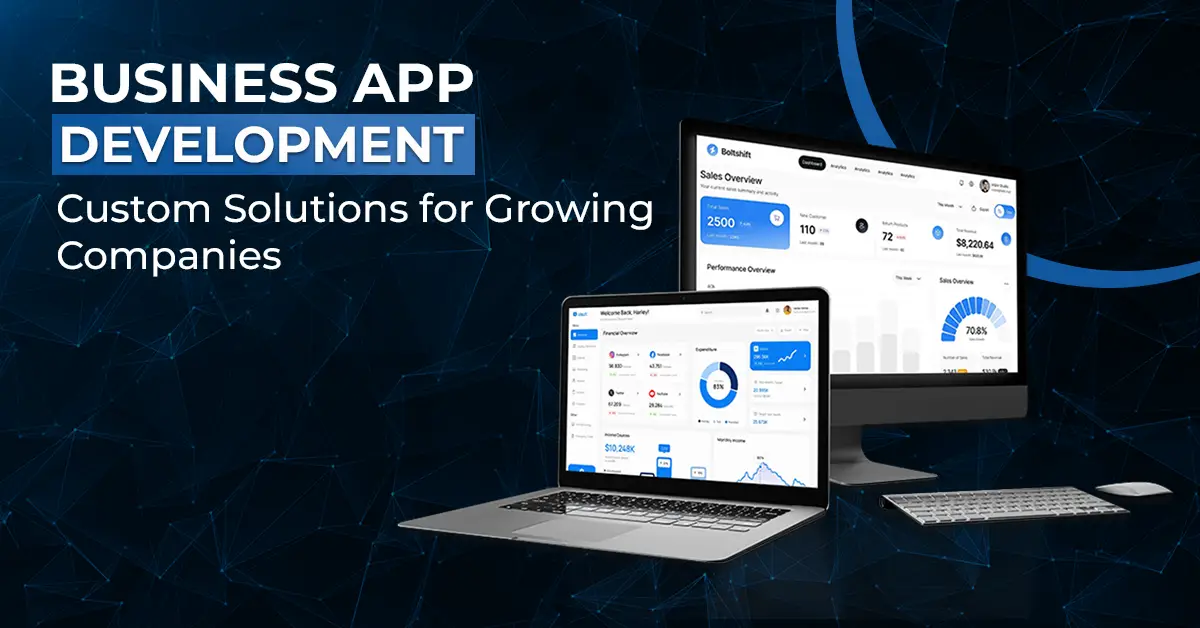
Business App Development: Custom Solutions for Growing Companies
What happens when your business grows faster than your management systems can handle? Things start getting messy at every step. As customer data gets cluttered, managing daily business operations becomes more difficult. Teams often rely on multiple tools to manually complete a single task. The company continues to move forward, but the systems working behind it gradually make management slower and more difficult. That is often the moment when a business needs something more than another software subscription. This is where business app development comes in. A custom business application can bring important processes, data, teams, and workflows into one place. Instead of using general software for business operations, you can build a management app that supports your daily operations. For growing companies, that flexibility can make a real difference. This blog will explore the scope of business app development and how it benefits growing companies.
What Is Business App Development?
Business app development helps companies manage the entire operations of a company. It supports internal workflows for employees, customers, leads, and internal tasks. The app can be created for mobile phones, browsers, or desktops. Additionally, these enterprise applications work as business process automation systems and perform different tasks. According to Gartner, the global enterprise software market grew 11.1% in 2025 and is projected to reach $722 billion by 2029. For example, a business may need an app for:
- Managing clients, customers and leads
- Tracking sales and orders
- Managing employee tasks
- Automating internal workflows
- Monitoring inventory
- Handling bookings or appointments
Here is a table showing some common business applications.
| Business Apps | What It Manages |
|---|---|
| Customer Management | Customers, leads, and support |
| Employee Management | Tasks, schedules, and communication |
| Inventory Management | Stock, orders, and suppliers |
| Project Management | Workflows, deadlines, and approvals |
Common Types of Business Applications
Custom solutions can be developed for almost every area of a business. The main purpose is to automate the daily workflows across the entire company's operations. According to Mordor Intelligence, the workflow automation market is estimated to reach $26.01 billion in 2026 and $40.77 billion by 2031. Some common examples of business apps include:
1.Customer Management Apps
A custom CRM can be especially useful when a company's sales process doesn’t fit into a standard system. These applications help businesses manage customer information, communication, sales opportunities, and support requests.
Employee Management Apps
Companies are using employee management apps to enhance their workflows. They help them manage employees' daily attendance, performance, appointments, meetings, and internal communication. Also, these are used by companies that work remotely.
Inventory Management Apps
Companies that manage products can use custom applications to track inventory, orders, suppliers, deliveries, and product movement. The application can also connect with ecommerce platforms or internal systems.
Project Management Apps
Growing companies have multiple projects to manage. They implement project management apps to monitor stages, decisions, and reporting phases.
Why Growing Companies Need Enterprise App Development Services
Every growth eventually comes with challenges. A system that works perfectly for a small team may get stuck when your company grows to 100 or more employees. The more employees or customers you have, the more data there is to manage. So, businesses cater to this by implementing multiple tools, like one for task management, another for internal communication and one for approvals. But today, technology has changed. Entering the same business information into multiple systems requires more time. It clutters the data across platforms, making it difficult for employees to gather information before making decisions.
A custom business app can help simplify this situation through API integration. Instead of adding another disconnected tool, businesses can create a central solution that connects important processes and makes information easier to access.
The Biggest Benefits of Custom Business App Development
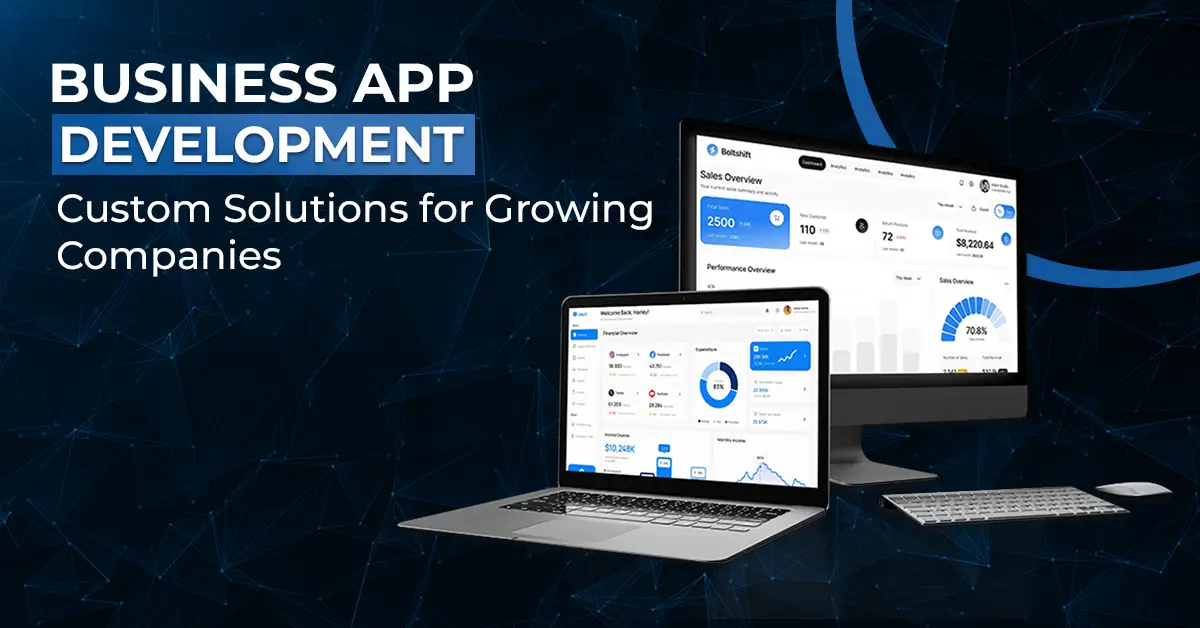
Custom business app development has multiple benefits. It improves your work efficiency and gives your employees an enhanced system to manage daily tasks. Here are some of the biggest benefits:
1.Built Around Actual Workflow
Every business has its own way of operating. Even companies in the same industry may have completely different processes. A simple application may cover the basic requirements, but it often includes features you don’t need while missing the ones you actually do. Custom app development for business is actually built to work around your company’s workflow. It starts by asking some common questions, such as, How does a task move from one department to another? What information does your sales team need? Where do delays usually happen? What tasks are repeated every day? The application can then be designed to support those specific requirements. This can reduce unnecessary steps and make everyday work easier for employees.
2. Better Efficiency and Productivity
An inefficiency may cause problems for your growing company. For instance, your employee spends half an hour moving data across systems. That may not look difficult. But when multiple employees perform the same task, completion time increases. That is where custom business apps can automate repetitive work and reduce manual processes. For example, an application can automatically:
- Send notifications
- Update customer information
- Generate reports
- Assign tasks to the right team member
- Track order status
- Send reminders for pending actions
Automation doesn’t replace the people behind the business. Instead, it gives them more time to focus on work that requires actual thinking, creativity, and decision-making.
3. Improved Access to Business Data
Mobile app development for growing companies helps them make better decisions by providing access to clear, accurate information. The problem is that important data is often spread across multiple systems. Custom business app development can bring relevant information together into one dashboard or platform. Managers can view the data they need without asking different departments to manually prepare reports. For example, a business owner may want to see:
- Current sales performance
- Active projects
- Customer activity
- Employee productivity
- Inventory levels
- Revenue trends
Having this information available in one place can make decision-making faster and more informed. The key is not simply collecting more data. It is presenting the right data in a way that people can actually understand and use.
4. A Better Experience for Employees
Modern technology makes your regular work easier. If your employees face difficulties every day, productivity becomes low. They may create workarounds, return to spreadsheets, or avoid using the system altogether. A well-designed custom app focuses on the people who will actually use it. The interface can be created around their daily tasks. Features can be simplified. Unnecessary options can be removed. Important information can be easier to find. This is why UI/UX design is important in business app development.
5. Scalability for Future Growth
Solutions that work for your current workforce may become a limitation in the future. To cater for this, business apps are designed with modern features to ensure scalability. As the business grows, you can add new features and functionalities. For instance, a company may utilize enterprise app development services for task management. Later, it can add features such as customer access, automation, or custom integrations. This flexibility allows your scalable software to grow alongside the company rather than become outdated.
The Business App Development Process
A successful business app has more than just a good design or clean code. It is developed with your business requirements in mind. The development process for a business app starts with proper planning, including understanding the business, its audience, and goals. After that, the process may include:
1. Requirement Analysis
In the first phase, the developers conduct requirements analysis to identify the main problems in the market. This helps them to list the app's features.
Planning and Strategy
After the analysis, the app technology, timeline, target audience, and priorities are planned.
UI/UX Design
To make the app simple and user-friendly, multiple UI/UX designs are created to ensure ease of use.
Development
Now comes the app development process with approved designs and features.
Testing
Testing is a crucial phase of your business app. It involves testing your business application to ensure it performs well.
Launch and Ongoing Support
After the testing, your business app goes live. Further, it requires regular updates and additional features for improvements.
Final Thoughts!
Business growth means more employees to manage, more customers to handle, and more operations to cater to. For this, your business needs to automate its entire operations to enhance workflows and engage customers. This is where business app development can make a real difference. Instead of forcing a company to work around software built for a general audience, a custom app can be created around the way the business actually operates. So, if you want to enhance your workflow through custom app development, contact AdamIS Tech for your next custom app.